Project Shyness
Research Institute Child Development and Education
Shyness is very common among young children and it has important consequences for children’s social life. It is, therefore, important to understand how shyness develops and what social functions it serves. In the Project Shyness, we run several studies to better understand the development of shyness from infancy to childhood, what role parents play in the development of their children’s shyness, and the social benefits and costs of childhood shyness. The Project Shyness is ran at the Research Institute of Child Development and Education at the University of Amsterdam and funded by the Dutch Research Council (NWO) Talent VENI grant.
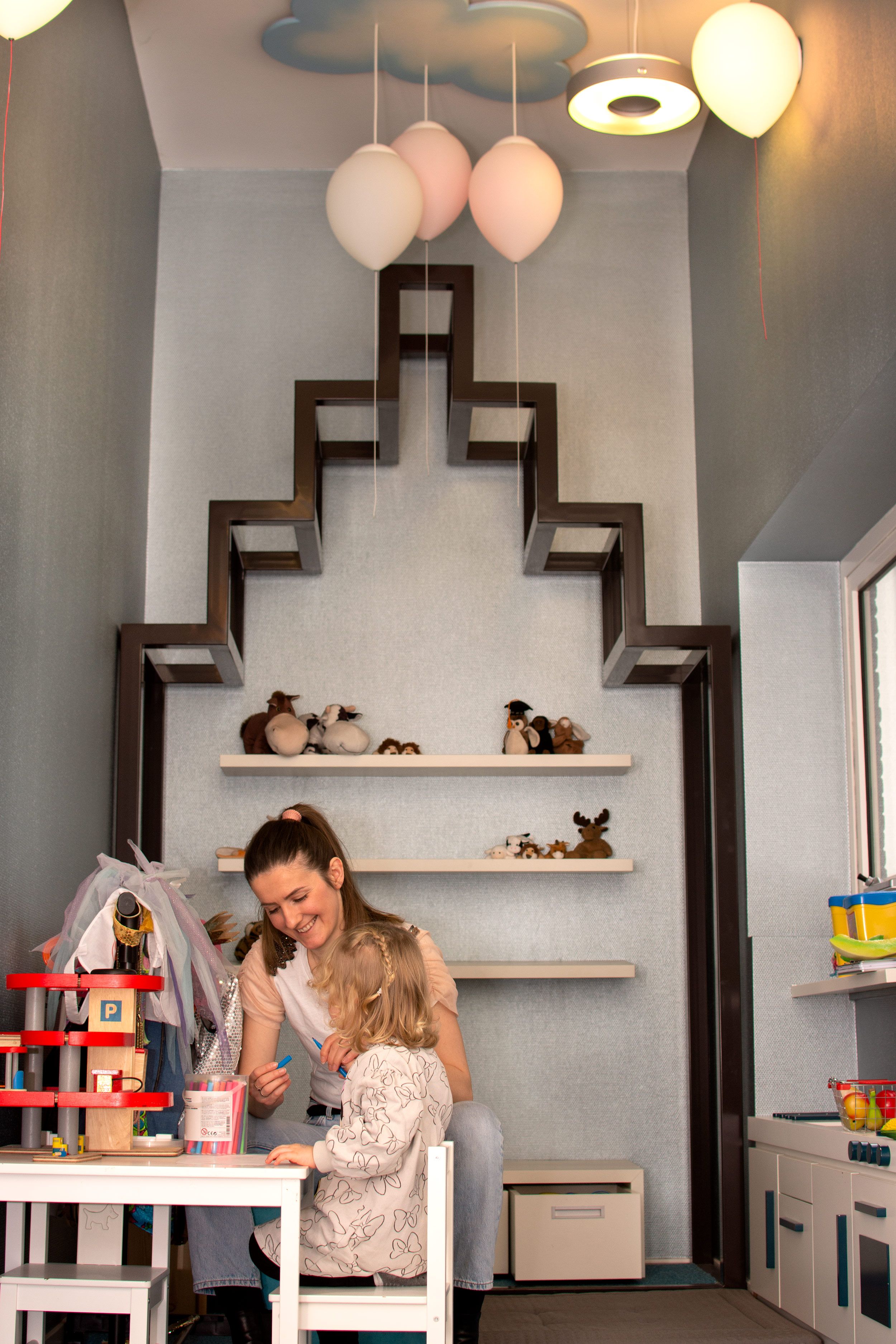
In our studies, we include babies and children of different ages. Because of that, some studies take place in the Family or Baby lab of the University of Amsterdam and some studies take place outside the labs (for example, in the NEMO Science Museum).
We define shyness as a self-conscious emotion that everyone can experience from time to time when exposed to other people’s attention. It reflects the ambivalence between social interest and social wariness. Shyness is typically displayed through a coy-smile—briefly looking away while smiling— and displaying a quickly appearing and disappearing blush. When dysregulated, however, it is characterized by negative affect, looking away longer, and prolonged blushing.
Typical displays of shyness in children, such as coy-smiles and quickly appearing and disappearing blushing, communicate to others that the child cares about social norms and rules and about others’ opinions of them. These coy-smiles displays make other people assess children more positively and, at the same time, they motivate the child to behave prosocially. Thus, we think that displaying shyness in the form of coy-smiles and quickly appearing and disappearing blushing is adaptive and facilitates healthy social functioning of children.
Some children display dysregulated shyness and some children display no signs of shyness when they are exposed to others’ attention. This can, for example, happen when performing in front of others, or meeting new people. We call this atypical shyness. Dysregulated and absent shyness disables children to engage with others successfully and may be related to the development of psychopathology.